 If you’re dealing with hard times, here is how to use NLP techniques to find peace of mind and let go of negative thinking!
NLP is simple to use – and is one of my favorite tools for training my mind to stay positive and peaceful.
Those letters NLP stand for “Neuro-linguistic Programming.”
NLP quickly explained:
- Neuro-linguistic Programming is a therapy built on the belief that when you use “self-loving language” and “positive symbolic visuals” you can influence your subconscious mind to let go of negativing thinking and uncomfortable feelings.
- Basically, NLP uses easy, simple “language” or “visual messages” to influence thoughts and behaviors.
Today in this article I want to share 3 of my favorite techniques from NLP which can help you to let go and find the peace of mind you are seeking.
Note: If you want more helpful tools to find peace of mind, check out my Anxiety Cure Digital Course.
NLP Technique #1 to find peace of mind:
This NLP re-framing tool is simple to use – and will help you to quickly let go and find more peace of mind.
How it works: You take any negative thoughts you might be telling yourself – and “dilute” them – so they become a bit more positive.
For example, stop saying things like “I’m____”:
- furious!
- devastated!
- completely crushed.
Replace these with milder expressions like “I’m_____”:
- a bit miffed.
- disappointed.
- surprised.
The logic:
Sometimes it’s tough to start using completely pollyanna positive words – when you’re in a truly dark place.
You can start to slowly inch forward to more positive language, by at least diluting negative words, so they’re less oppressive.
In general, you should do your best to mindfully pepper your thoughts, conversations, and journal writing with as many strong, uplifting words as you can. Then, you gotta keep your thoughts aimed in this positive direction!
NLP Technique #2 to find peace of mind:
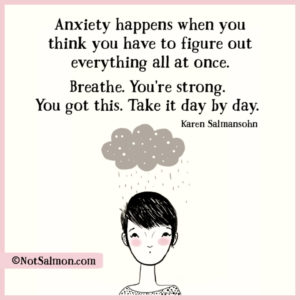 This NLP Technique is considered a combination of “Pattern Interrupt” and “Loop Break.”
(Because it taps into 2 techniques, it’s especially helpful in helping you to find peace of mind.)
I want you to create and regularly repeat a specific “comfort phrase” to interrupt your present negative thinking – and get yourself to pause, breathe, relax.
This “comfort phrase” works sort of like that famous concept of counting to 10 before you say something in anger. But it’s more fun to use.
In a way using a “comfort phrase” is like creating a “Positive Thought Jingle.” If you repeat the “comfort phrase” enough, eventually it will naturally start to play in your mind – like a “catchy jingle” – stuck on repeat.
How to use this “comfort phrase” in daily life…
Let’s say you feel a moving train of negative thoughts coming your way. You can stop that negativity right in its tracks, by repeating one of the following “comfort phrases.”
- I’m the type of person who makes the world say yes to me.
- I’m an indomitable spirit, a phoenix rising from the ashes. Nothing keeps me down!
- When life gives me rough waves, I surf ’em!
- I am a warrior.
- Forward and upward.
Note:
Be sure to select only one specific “comfort phrase” to own as your own.
You can speak or sing it – either out loud or silently in your mind.
If you use it regularly to interrupt your negative thinking, eventually you will start to feel more positive about yourself.
NLP Technique #3 to find peace of mind:
This particular tool is for you to use to comfort the people you know who are going through hard times. However you can also use this technique on yourself.
The tool comes from Boris Cyrulnik, a famed French ethologist, who performed a lot of research studies on trauma recovery.
Cyrulnik discovered that many of the compassionate things people say to those undergoing a trauma can accidentally wind up hurting these folks.
For example:
- “I’m so sorry!”
- “You must be in so much pain!”
- “How terrible for you that this awful thing happened!”
Cyrulnik noticed that if someone expressed too much pity or horror to someone dealing with hard times, they could accidentally escalate the sufferer’s emotional pain.
His recommendation?
Tell people going through a hard time:
Why?
Cyrulnik discovered when you remind someone how strong they are, you can actually help them to become more strong!
You can also use this word “strong” on yourself
- Whenever you share your pain about your challenges, be sure to end your conversation by saying: “But I know I am strong and I can get through this.”
- Plus, if you find yourself in an obsessive negative thought spree (even if you’re alone and obsessing in private) interrupt yourself immediately with the reminder, “But I know I am strong, and I will get through this.“
Cyrulnik’s research on the power of the word “strong” reminds me of a famous research study done by John Bargh – on the power of words.
Bargh’s Famous Study
Bargh gave 2 different groups of people 2 different lists of words to un-jumble. He told them they were being tested on simple problem solving.
- The first list contained words suggesting impatience, rudeness and aggressiveness.
- The second list had words suggesting patience, politeness and calm.
After the test was completed, the participants were asked to bring their lists to an administrator – who was deep in conversation with a colleague. Actually, this was when the true experiment kicked into gear!
- All the participants given the list of words suggesting rudeness and aggressiveness became those exact words. They angrily interrupting the administrator.
- However, of the participants primed with language suggesting patience and calm 82 percent never interrupted the administrator at all.
If you want to find peace of mind, remember…
- The words we use, hear and think are powerful!
- Try to pick words which support you and motivate you to think more peacefully and confidently.
- If you regularly use these NLP Tools, you will become a more positive, happy person.
Get more tools stop overthinking and overwhelm
Check out The Anxiety Cure, my bestselling video course.
Stop allowing anxiety to steal your happiness.
These relaxation tools are recommended by our world’s top psychologists, neuroscientists and meditation teachers!
Learn how to…
- identify the root cause of your anxiety – then pull out your anxiety by the root – so it doesn’t keep coming back
- use a range of simple meditations to calm your mind, improve focus & boost confidence
- stop your brain from overthinking at night – so you sleep more easily
- be more productive and confident at work – by using a simple 3 minute “thought mastery tool”
Get a peek inside the video course + learn more now!
P.S. Before you zip off to your next Internet pit stop, check out these 2 game changers below - that could dramatically upscale your life.
1. Check Out My Book On Enjoying A Well-Lived Life: It’s called "Your To Die For Life: How to Maximize Joy and Minimize Regret Before Your Time Runs Out." Think of it as your life’s manual to cranking up the volume on joy, meaning, and connection. Learn more here.
2. Life Review Therapy - What if you could get a clear picture of where you are versus where you want to be, and find out exactly why you’re not there yet? That’s what Life Review Therapy is all about.. If you’re serious about transforming your life, let’s talk. Learn more HERE.
Think happier. Think calmer.
Think about subscribing for free weekly tools here.
No SPAM, ever! Read the Privacy Policy for more information.
One last step!
Please go to your inbox and click the confirmation link we just emailed you so you can start to get your free weekly NotSalmon Happiness Tools! Plus, you’ll immediately receive a chunklette of Karen’s bestselling Bounce Back Book!